Author: Kiki Sarzetaki

  • After the Credits

    Brief notes on films I’ve watched—what stayed with me, and something I learned. These reflections may contain spoilers.

    La Strada — Federico Fellini, 1954

    I loved Gelsomina. Giulietta Masina was extraordinary—funny, vulnerable, strange and deeply moving without ever asking us to pity her.
    Perhaps the harshest thing Fellini does is take her away from us before the end; we don’t see her loss, we feel her absence.
    When Zampanò learns that she has died, something in him finally breaks. He cries for Gelsomina, perhaps for the way he treated her, and perhaps for much more in his own life.

    Something I learned: Giulietta Masina was Fellini’s wife, and the role of Gelsomina was written specifically for her. Producers wanted other actresses, but Fellini refused to make the film without Masina in the role.

    The Third Man — Carol Reed, 1949

    I loved the beautiful, crisp black-and-white cinematography and the atmosphere of postwar Vienna. The zither score was too intrusive for me and often pulled me away from what was happening on screen.
    I admired the film more than I connected with its characters.

    Something I learned: The music that distracted me so much came from an Austrian zither player, Anton Karas. Carol Reed heard him playing at a welcome party in Vienna and was so taken by the unusual sound that he abandoned the planned orchestral score and used Karas’s zither throughout the film.

    Bringing Up Baby — Howard Hawks, 1938

    Pure delight. Katharine Hepburn and Cary Grant are wonderful together—absurd, elegant and hilarious.
    I loved the speed, the chaos and the beautiful images, although that same pace left little time to really get to know the characters.
    Not one that moved me deeply, but one I thoroughly enjoyed.

    Something I learned: This wasn’t Hepburn’s first film, but it was her first pure comedy. Howard Hawks initially thought she was trying too hard to be funny and had comedian Walter Catlett coach her to simply play the lines rather than play for laughs. Hepburn found his advice so useful that she asked Hawks to keep Catlett around—and he ended up playing the town constable in the film.


    ΕΛΛΗΝΙΚΑ

    Σύντομες σημειώσεις για ταινίες που είδα — τι μου έμεινε και κάτι που έμαθα. Οι σκέψεις αυτές μπορεί να περιέχουν spoilers.

    La Strada — Federico Fellini, 1954

    Αγάπησα τη Gelsomina. Η Giulietta Masina ήταν εκπληκτική — αστεία, ευάλωτη, παράξενη και βαθιά συγκινητική, χωρίς ποτέ να μας ζητά να τη λυπηθούμε.
    Ίσως το πιο σκληρό πράγμα που κάνει ο Fellini είναι ότι μας τη στερεί πριν από το τέλος. Δεν βλέπουμε την απώλειά της, νιώθουμε την απουσία της.
    Όταν ο Zampanò μαθαίνει ότι πέθανε, κάτι μέσα του τελικά σπάει. Κλαίει για τη Gelsomina, ίσως για τον τρόπο που της φέρθηκε, και ίσως για τη δική του στάση ζωής.

    Κάτι που έμαθα: Η Giulietta Masina ήταν η σύζυγος του Fellini και ο ρόλος της Gelsomina γράφτηκε ειδικά για εκείνη. Οι παραγωγοί ήθελαν άλλες ηθοποιούς, αλλά ο Fellini αρνήθηκε να κάνει την ταινία χωρίς τη Masina στον ρόλο.

    Ο Τρίτος Άνθρωπος (The Third Man) — Carol Reed, 1949

    Μου άρεσε ιδιαίτερα η όμορφη, καθαρή ασπρόμαυρη φωτογραφία και η ατμόσφαιρα της μεταπολεμικής Βιέννης.
    Η μουσική με το τσίτερ μού φάνηκε αρκετά παρεμβατική.
    Θαύμασα την ταινία περισσότερο απ’ όσο συνδέθηκα με τους χαρακτήρες της.

    Κάτι που έμαθα: Η μουσική που με ενόχλησε τόσο ήταν του Αυστριακού Anton Karas, που έπαιζε τσίτερ. Ο Carol Reed τον άκουσε τυχαία να παίζει σε μια εκδήλωση στη Βιέννη και ενθουσιάστηκε τόσο με τον ασυνήθιστο ήχο, ώστε εγκατέλειψε την ιδέα της ορχηστρικής μουσικής και χρησιμοποίησε το τσίτερ του Karas σε ολόκληρη την ταινία.

    Η Γυναίκα με τη Λεοπάρδαλη (Bringing Up Baby) — Howard Hawks, 1938

    Σκέτη απόλαυση. Η Katharine Hepburn και ο Cary Grant είναι υπέροχοι μαζί — παράλογοι, κομψοί και ξεκαρδιστικοί.
    Μου άρεσαν πολύ ο γρήγορος ρυθμός, το χάος και οι όμορφες εικόνες, αν και αυτός ο ίδιος ρυθμός δεν άφηνε πολύ χρόνο για να γνωρίσουμε πραγματικά τους χαρακτήρες.
    Δεν ήταν μια ταινία που με συγκίνησε βαθιά, αλλά την απόλαυσα.

    Κάτι που έμαθα: Δεν ήταν η πρώτη ταινία της Hepburn, αλλά ήταν η πρώτη της καθαρόαιμη κωμωδία. Ο Howard Hawks πίστευε αρχικά ότι προσπαθούσε υπερβολικά να είναι αστεία και ζήτησε από τον κωμικό Walter Catlett να τη βοηθήσει να παίζει τις ατάκες χωρίς να προσπαθεί να προκαλέσει το γέλιο. Η Hepburn βρήκε τις συμβουλές του τόσο χρήσιμες, ώστε ζήτησε από τον Hawks να τον κρατήσει στην ταινία — και τελικά έπαιξε τον αστυνομικό της πόλης.
  • What We Give

    Shoplifters (2018) — Hirokazu Kore-eda

    Shoplifters was heartbreaking.

    Kore-eda brings us quietly into this unconventional family, and somehow we begin to care for them despite all the things they do wrong.

    They play. They laugh. They care for one another. And gradually the question becomes: what makes a family? Blood? The law? Or the way we care for one another?

    Osamu and Shota have a genuine bond. But Osamu also teaches Shota to steal because, as he eventually admits, it is what he knows how to teach him.

    We give what we know.

    But Shota notices something.

    When Yuri begins to be drawn into shoplifting, he doesn’t want her to learn what he has learned. He tries to protect her from it.

    We inherit more than we realize—from our families, our relationships, our cultures. Ways of loving. Ways of reacting. Ways of surviving.

    For a long time, they simply feel like the way things are.

    Until we notice.

    We cannot choose what shaped us.

    But we can question it.

    And perhaps that is where change begins:

    What was given to me doesn’t have to be what I give to someone else.


    Η ταινία Κλέφτες Καταστημάτων με συγκίνησε βαθιά.

    Ο Κόρε-έντα μάς βάζει αθόρυβα μέσα σε αυτή την αντισυμβατική οικογένεια και, με κάποιον τρόπο, αρχίζουμε να νοιαζόμαστε γι’ αυτούς, παρ’ όλα τα λάθη που κάνουν.

    Παίζουν. Γελούν. Νοιάζονται ο ένας για τον άλλον. Και σιγά σιγά γεννιέται το ερώτημα: τι είναι αυτό που κάνει μια οικογένεια; Το αίμα; Ο νόμος; Ή ο τρόπος που φροντίζουμε ο ένας τον άλλον;

    Ο Οσάμου και ο Σότα έχουν έναν αληθινό δεσμό. Όμως ο Οσάμου μαθαίνει επίσης στον Σότα να κλέβει γιατί, όπως παραδέχεται κάποια στιγμή, αυτό είναι που ξέρει να του μάθει.

    Δίνουμε αυτό που ξέρουμε.

    Όμως ο Σότα παρατηρεί κάτι.

    Όταν η Γιούρι αρχίζει να παρασύρεται κι εκείνη στις μικροκλοπές, δεν θέλει να μάθει αυτό που έμαθε ο ίδιος. Προσπαθεί να την προστατεύσει από αυτό.

    Κληρονομούμε περισσότερα απ’ όσα συνειδητοποιούμε — από τις οικογένειές μας, τις σχέσεις μας, τους πολιτισμούς μέσα στους οποίους μεγαλώνουμε. Τρόπους να αγαπάμε. Τρόπους να αντιδρούμε. Τρόπους να επιβιώνουμε.

    Για πολύ καιρό, μας φαίνεται ότι έτσι πρέπει να είναι τα πράγματα.

    Μέχρι που τα παρατηρούμε.

    Δεν επιλέγουμε αυτά που μας διαμόρφωσαν.

    Μπορούμε όμως να τα αμφισβητήσουμε.

    Και ίσως από εκεί αρχίζει η αλλαγή:

    Αυτό που μου δόθηκε δεν χρειάζεται να είναι αυτό που θα δώσω κι εγώ σε κάποιον άλλο.

  • When Love Is Not Enough

    I finished watching A Woman Under the Influence and one word has stayed with me:

    Unequipped.

    Mabel’s family loves her. Nick loves her. Her children love her. And yet they have so little understanding of what is happening to her, and so few tools to respond.

    They are unequipped.

    That is what I found most painful.

    Pain is expressed through behavior. The behavior frightens or hurts someone. They react from their own fear, anger or helplessness. That reaction creates more pain. Nobody quite understands what the other is experiencing. Nobody knows how to interrupt the cycle.

    Pain. Inability to express it. Reaction. More pain. Guilt. Tenderness. A return to normal. And then it begins again.

    There is love throughout all of this. That may be the hardest part.

    Love can be something I feel, but loving is something I do—and to love someone well, I have to understand what they need.

    We can feel enormous love for someone and still fail to listen, or try desperately to help while doing the very thing that makes them feel more alone.

    Nick wants Mabel to be all right. He wants to protect her, protect the children, protect their family. But he doesn’t know how. His fear becomes anger. His protection becomes control. His love sometimes becomes something Mabel has to survive.

    He loves her. But he doesn’t know how to love her.

    And Mabel cannot give words to what is happening inside her.

    Again and again, everyone seems to be asking her to behave differently when perhaps what she needs first is for someone to understand what she is trying to say.

    One sentence keeps returning to me:

    “Daddy, will you stand up for me?”

    It is such a simple plea.

    Someone please see me.

    Someone please listen.

    Someone please be on my side.

    Not necessarily because I am right, but because I am struggling.

    And then there are the children.

    They are there through all of it. Watching. Listening. Learning.

    What do children learn about love when love and fear live in the same room? What happens to feelings that nobody helps them name? How much of what they witness will they carry into their own relationships?

    And then, after everything that has happened, Mabel and Nick tidy the room.

    They prepare their bed. They get ready to sleep together.

    Life returns to normal, except nothing has really been resolved.

    That ending felt so real. Haven’t we all done this in one way or another? Pushed what hurts under the carpet, put everything back in its place, said we love each other, and carried on.

    Until the pain finds another way out.

    We have come a long way since the time depicted in this film in understanding mental health, trauma and family dynamics. We have words and knowledge that many families simply did not have.

    And yet people are still unequipped in so many ways. But we are learning.

    And perhaps understanding has to begin with ourselves. If we don’t understand our own fears, needs and reactions, how can we understand what belongs to the other person and what belongs to us?

    We cannot completely enter another person’s mind. We cannot always fix what hurts them. Sometimes we don’t even know what questions to ask.

    But we can learn to notice ourselves before reacting.

    To listen before answering.

    To ask instead of assuming.

    To try to understand what is underneath the behavior—theirs and ours—before responding.

    And perhaps this is where my earlier thought—understand before judging—needs to go one step further.

    Understanding is not only an alternative to judgment.

    It is also part of learning how to love.

    Because loving someone and understanding them are not always the same thing.

    And sometimes love needs listening before it knows what to do.

  • Understanding Before Judging

    As I’ve been making my way through the films of F. W. Murnau, Carl Theodor Dreyer, Vittorio De Sica, Yasujirō Ozu, Elia Kazan, Satyajit Ray, Jean Renoir, and the plays of Eugene O’Neill, I’ve begun to notice a thread connecting them all.

    These artists are not primarily interested in deciding who is right and who is wrong.

    Instead, they ask a different question:

    What happened to this person?

    That small shift changes everything.

    Judgment creates distance.

    Understanding creates compassion.

    To understand someone does not mean approving of every choice they make. It does not excuse cruelty, dishonesty, addiction, betrayal, or violence. Rather, it means recognizing that every human being has a history, a wound, a fear, a hope, a love, or a loss that shapes the way they move through the world.

    Jean Renoir expressed this beautifully when he said:

    “The awful thing about life is this: everyone has their reasons.”

    At first, this sounds almost unsettling. If everyone has their reasons, where does responsibility fit?

    But I don’t think Renoir meant that every reason is justified. I think he meant that almost no one sees themselves as the villain of their own story. Each of us lives inside a story that makes sense to us. Every action, even a misguided one, usually grows from something deeper: love, fear, pride, loneliness, shame, hope, or pain.

    The greatest artists don’t ask us to admire their characters.

    They ask us to recognize their humanity.

    Umberto is not simply a stubborn old man.

    The hotel doorman is not simply a man who lost his job, nor is he weak or unimportant.

    Antonio is not simply a failed father.

    Mary Tyrone is not simply an addict.

    Jamie is not simply destructive.

    Noriko is not simply obedient.

    Bruno is not simply a child.

    They are people carrying invisible burdens, loving imperfectly, trying to preserve their dignity, and finding their way through life as best they can.

    As I was reflecting on this, a memory returned to me.

    When my daughter Irini was about four years old, she was playing quietly with a handful of little figurines. Two of them were fighting.

    I asked her what was happening.

    Without hesitation, she answered,

    “They’re fighting because each one thinks they are the good one and the other is the bad one.”

    I remember looking at her with wonder.

    How had a four-year-old understood something that many adults spend a lifetime trying to learn?

    Years later, while watching these films, I realized she had already grasped what the greatest storytellers keep trying to teach us.

    Each person believes they are the hero of their own story.

    That does not make everyone right.

    But it does invite us to look more deeply before we judge.

    Perhaps this is one of the greatest gifts of art.

    It slows us down.

    It replaces certainty with curiosity.

    It asks us to wonder,

    What burden might this person be carrying?

    And perhaps, every now and then, to ask the same question of ourselves.

    Maybe compassion begins not when judgment disappears, but when understanding is allowed to come first.

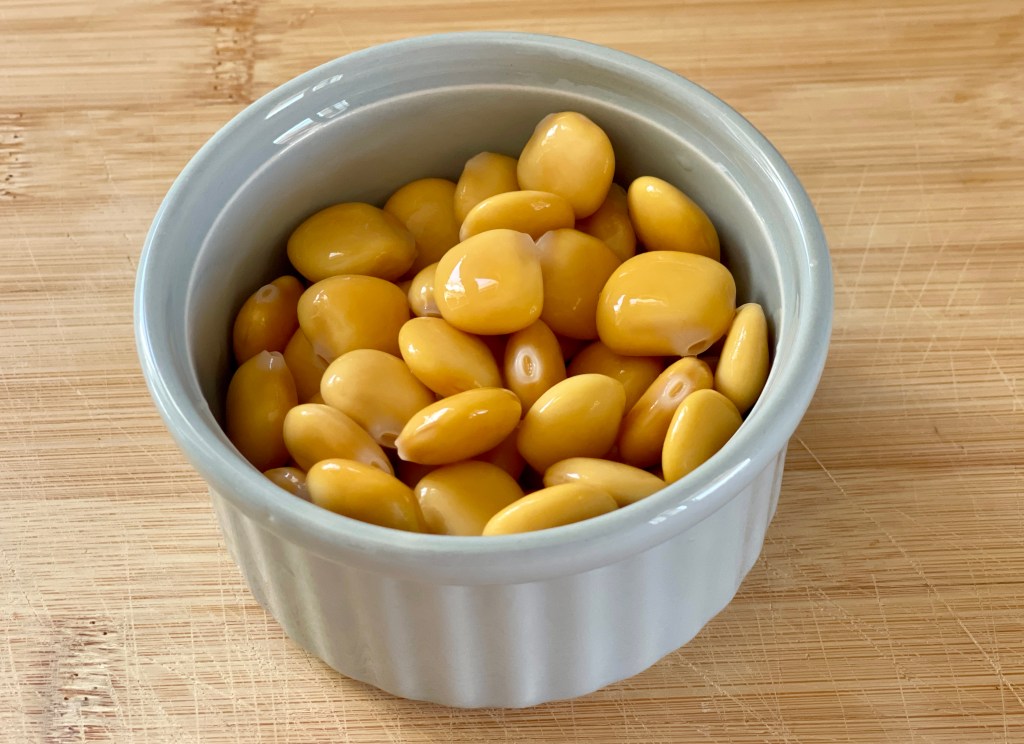
  • Lupins: Why did we stop eating them?

    Lupins: Why did we stop eating them?

    Why did we stop eating it?

    Every so often I come across a food that makes me stop and wonder:

    Lupins have been nourishing people for thousands of years. They grow well in poor soils, are packed with nutrients, and yet today, when I ask people if they’ve ever heard of them, many haven’t.

    If you grew up in Greece, you may remember them sitting in large glass jars at the grocery store or being sold at village festivals. They were a simple snack, often enjoyed with a little salt and a glass of wine.

    In many Mediterranean countries, however, they had another purpose too. Farmers also grew them as a valuable source of protein for their animals. Today, in fact, a large percentage of the world’s lupin crop is still used as livestock feed.

    Perhaps that’s one reason we forgot how valuable they are as food for ourselves.

    Now nutrition science seems to be catching up with what tradition already knew.

    What makes lupins unique is not just their nutritional value but the combination of nutrients they provide.

    A 100-gram serving of cooked lupins provides approximately:

    • 16–18 g protein
    • 15–16 g fiber
    • Relatively few digestible carbohydrates
    • Healthy unsaturated fats
    • Magnesium
    • Potassium
    • Iron
    • Manganese
    • Copper
    • Folate

    Unlike many plant foods that are high in carbohydrates, lupins are naturally rich in protein and fiber while remaining relatively low in digestible carbohydrates. That combination makes them remarkably satisfying. They fill you up instead of sending you looking for another snack an hour later.

    Among commonly eaten legumes, lupins are second only to soybeans in protein content. Unlike most beans and lentils, they also contain relatively little starch and an exceptional amount of fiber, making them both satisfying and nutritionally unique.

    Like most legumes, lupins contain all of the essential amino acids but are naturally lower in methionine. Years ago, people were advised to combine legumes with grains such as rice at the same meal. Today we know that’s generally unnecessary. As long as your diet includes a variety of protein-rich foods over the course of the day, your body has what it needs.

    For anyone trying to eat less sugar, support healthy blood glucose, lose weight, or simply stay full longer, that’s an impressive nutritional package.

    But nutrition labels only tell part of the story.

    Fiber isn’t very exciting until you realize what it does.

    It feeds the trillions of microorganisms living in our gut. Those tiny organisms are now known to influence far more than digestion—they play a role in our immune system, metabolism, and even our mood.

    Protein matters too, especially as we grow older. Maintaining muscle isn’t only about lifting weights. Our bodies also need enough high-quality protein every day to repair and rebuild.

    What I appreciate most about lupins, though, is something much simpler.

    They make healthy eating easier.

    When I’m hungry, I don’t always need more willpower. I need better food within reach. A bowl of prepared lupins in the refrigerator is far more useful than another lecture about discipline.

    There is one important thing to know.

    If you’ve bought lupins in a jar, they’re ready to eat after a quick rinse. Rinsing also helps remove some of the excess salt. Keep in mind, however, that they are usually preserved in a salty brine and many brands also contain additives such as citric acid (E330) and the preservative sodium benzoate (E211).

    If you’ve bought dried lupins, the preparation depends on the variety.

    Traditional bitter lupins contain naturally occurring alkaloids that make them extremely bitter—and potentially unsafe to eat—unless they are properly prepared.

    The traditional method requires patience.

    Soak the dried lupins in plenty of water for 24 hours. Drain them, cover with fresh water, and simmer until tender, about 1–2 hours. Drain again, then place them in a large bowl of fresh water and change the water twice a day for 5–7 days, tasting one each day. Once all the bitterness has disappeared, they’re ready to eat.

    To store them, place the prepared lupins in a container of lightly salted water in the refrigerator. The salt helps preserve them, and they’ll keep well for several weeks. Just remember to give them a quick rinse before serving if you prefer a less salty taste.

    Interestingly, modern sweet lupin varieties have become popular in countries such as Australia, where they’re used to make everything from flour to pasta and high-protein snacks.

    Perhaps that’s another lesson hidden inside this little bean.

    Some things are worth waiting for.

    Once prepared, lupins are wonderfully versatile. Enjoy them with a little lemon, toss them into salads, blend them into a creamy dip, add them to soups, roast them with olive oil and spices, or even use sweet lupin flour in gluten-free baking.

    And here’s one more reason to appreciate them.

    Lupins don’t just nourish us—they nourish the soil. Like other legumes, they work together with bacteria in the soil to capture nitrogen from the air and naturally enrich the ground. Farmers have known this for generations, using lupins to improve the soil for the crops that follow.

    Healthy food.

    Healthier soil.

    Sometimes the simplest answers have been with us all along.

    So why did we stop eating them?

    Perhaps because they take time to prepare.

    Perhaps because processed foods replaced many traditional foods.

    Perhaps because something that was once considered “ordinary” no longer seemed interesting.

    Or perhaps because we forgot that some of the best foods don’t need clever marketing.

    They simply need remembering.

    I’m not suggesting lupins are a miracle food.

    There is no such thing.

    But I do think they’re one of those rare foods that deserve a place back on our tables.

    Sometimes the future of healthy eating isn’t about discovering something new.

    Sometimes it’s about rediscovering something old.

    Note: As always, I’m simply sharing what I’m learning and what I find interesting. This post is not medical advice. If you have a peanut allergy, please speak with your healthcare provider before trying lupins, as cross-reactivity can occur.